



search
date/time

Thu, 7:00AM
scattered clouds
19.6°C
SE 1mph
scattered clouds
19.6°C
SE 1mph
 | Sunrise | 4:43AM |
| Sunset | 7:48PM |  |
P.ublished 13th August 2026
nature
First Ospreys To Hatch On An RSPB Nature Reserve In England Have Chosen Cumbria
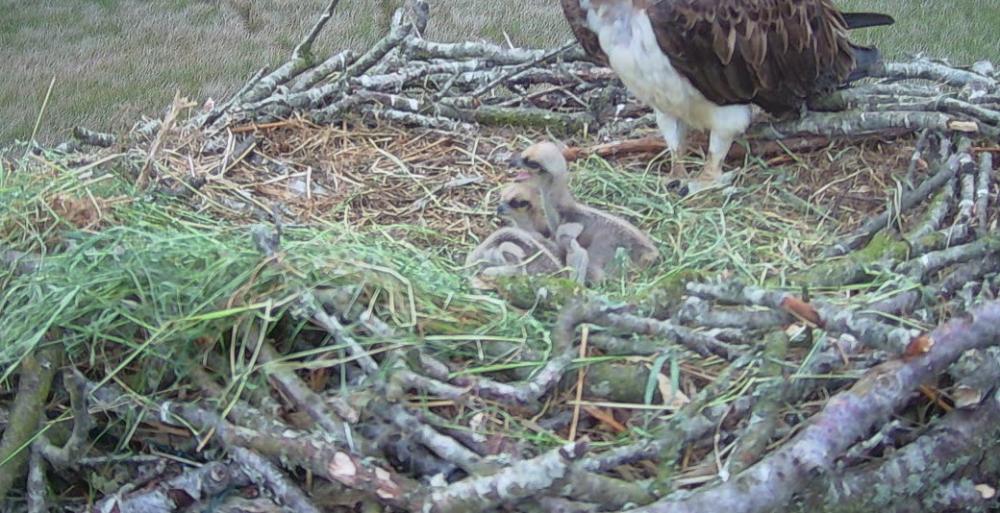
Three Osprey chicks in the nest on the platform at RSPB Campfield Marsh mid-June
Photo: RSPB
Ospreys were persecuted to extinction in the UK in the early 1900’s, this year marks the first pair to successfully breed on an RSPB nature reserve in England.
RSPB Campfield Marsh hosts a fabulous Osprey platform erected in 2018 on Holton Fen to attract these magnificent fish-eating birds of prey to nest. Incredible views of the birds with the young chicks in their nest on the platform can be enjoyed from the hide overlooking Holton Fen.
The three chicks hatched between 7 and 14 June and were fitted with leg rings on 17th of July. his will allow any further sightings of the young birds to be logged once they have fledged and their provenance and background heralded.
As this is a first for RSPB England the team at Campfield Marsh wanted to mark the occasion and reached out to their local primary school - Bowness on Solway Primary School in their last week of term with the golden opportunity to name the fast-growing chicks. The three chicks were each given a ring with numbers and letters on which we were able to associate with the chosen names: 1W5 unknown sex was named Ash, 1W6, a female, was named Bowness Bobbi and the smallest of the three, a male 1W4 was named Beau.
The chicks parents have an interesting story too, with the male bird - ‘Blue 571’ ringed as a chick in south-east Dumfries on 23 June 2021, and we believe he’s a first-time father. He was initially recorded as being a female alongside two other female siblings. The weight of an Osprey chick is the deciding in factor in determining whether it’s a female or male bird, however, this has subsequently proved to be incorrect in this case, when the bird laid eggs!
Blue 571 has been joined by an un-ringed female of unknown origin and age. The birds paired up after arriving in April and then settled down on the platform causing much excitement for the site team.
Blue 571 had been observed hanging around the nest platform and shuffling sticks about last year, along with around five other individual Ospreys, one of these an unringed bird. The birds, likely not fully mature and ready to mate were observed resting and roosting but did not attempt to breed.
Hopes were raised again in April this year when the pair were first spotted prospecting on the nesting platform. Twigs were brought in again and shifted about but hopes daren’t be raised any further until the glorious sight of an egg was seen on the nest camera on 30 April, with a second egg on 3 May and a third following three days later on 6 May.
We are incredibly excited to be the first RSPB reserve in England to host a pair of breeding Ospreys. After last year’s shenanigans we had high hopes that one of the birds we’d seen hanging around last year would drop back in and pick up a mate. We were on tenterhooks after the eggs were laid and throughout the incubation period until they hatched. There was huge collective sigh of relief when they did.
When the chicks hatched and were growing well, we knew we had to mark this momentous occasion. Bowness on Solway Primary School were thrilled to be involved in marking this amazing milestone event for the reserve and the RSPB. The names are absolutely brilliant, and it was obvious which name suited which bird when they were being ringed. Bowness Bobbi was the biggest of three chicks at nearly 2kg! We can’t wait to see where their adventures take them when they leave Campfield Marsh!
Ospreys are a migratory bird, spending the winter in West Africa, returning to the UK from March onwards to breed. The chicks at Campfield Marsh will likely fledge sometime in the next couple of weeks, they will likely loiter around the local area whilst they learn how to fish and fend for themselves. They will start making their way back to Africa from September onwards and their southward migration will likely be over a period of a 4-6 weeks.
Osprey parents are surprisingly tender despite their large size and sharp talons. They can also offer good comedic value with nest tidying exploits and antics. Ospreys are frequently site and partner faithful, so we’re hoping to be seeing more of them and their offspring in the future. It will be exciting to know when and where the chicks are next seen and find out where they choose to breed in a few year’s time.
The success indicates the vital role RSPB nature reserves play in supporting threatened bird populations by managing suitable habitat through conservation work to aid species recovery.
The shortened address for this article is: newspub.uk/220hk
Search Results